
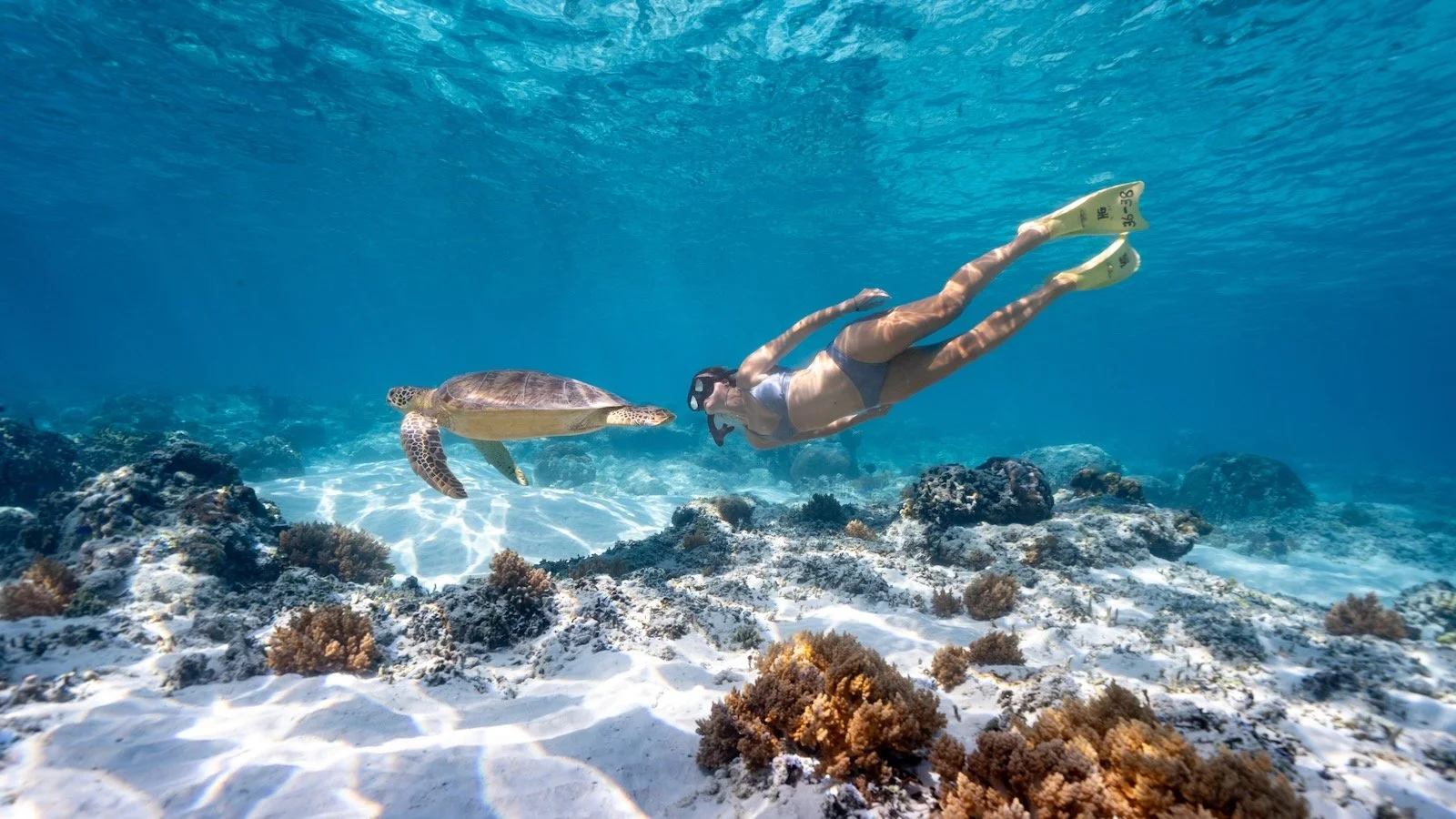
For a lot of people, the underwater world of the Gili Islands starts with a mask and snorkel. You float above the reef. You see your first turtle. You follow schools of tropical fish through clear water.
And then, at some point, you start wondering what it would be like to go a little deeper. That is where the line between snorkelling and freediving starts to get interesting.
The two activities are closely related. Both are about exploring the ocean on a single breath, without tanks or bulky scuba equipment.
The difference is what happens next.
Snorkelling keeps you at the surface, dipping below when something catches your eye.
Freediving teaches you how to slow everything down - your breathing, your movement, your heart rate and eventually your perception of what you thought your limits were.
So if you already love snorkelling and the underwater world, freediving is a very natural next step.
And on the Gili Islands, you can do both extremely well.
For easy access to turtles, coral reefs and the underwater sights around all three islands, Gili Snorkelling is our pick.
And if you want to take that connection with the ocean further, Freedive Gili on Gili Trawangan has been teaching people how to do exactly that for well over a decade.
Gili Snorkelling - Best for guided snorkelling trips across the three Gili Islands
Freedive Gili - Best for learning to freedive and progressing beyond recreational snorkelling
1. Gili Snorkelling - Best for Exploring All Three Islands
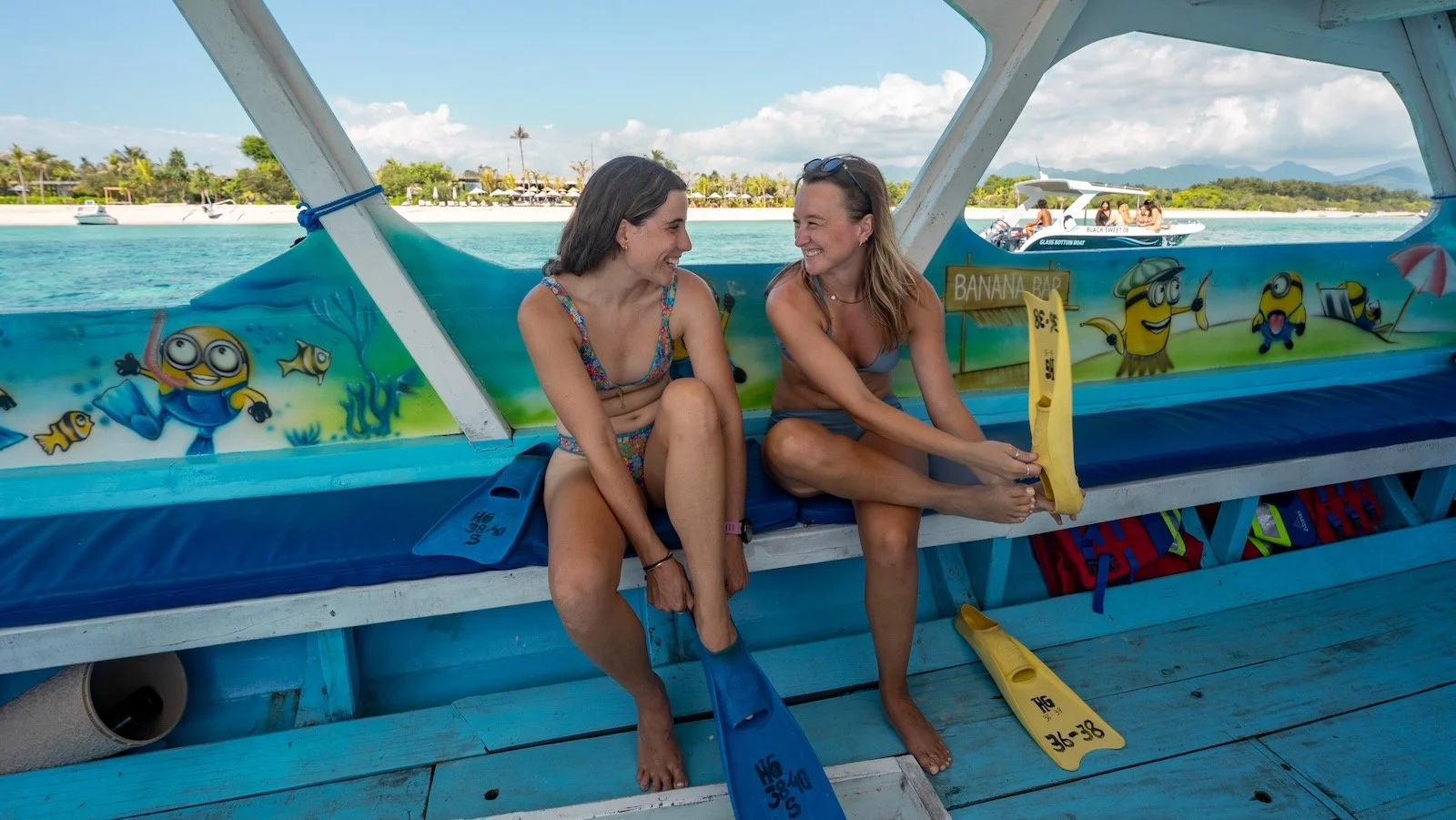
If your goal is simple - get on a boat, get in the water and see what makes the Gilis famous - Gili Snorkelling makes it very easy.
The company operates guided snorkelling trips around Gili Trawangan, Gili Meno and Gili Air, with options ranging from small shared groups to private charters. Its main office and meeting point are on Gili Trawangan, but private trips can also be arranged from Gili Air and other surrounding locations. That flexibility is useful.
Some travellers want the social element of joining a small group. Others would rather have the boat to themselves, particularly couples, families or groups of friends who want a more relaxed pace.
Gili Snorkelling offers both.
Its current small-group option is capped at six guests, while private tours are available in different durations, including two-hour and four-hour trips. Equipment, snorkelling guide, mineral water and GoPro use are included in the standard tour setup.
What Will You See?
The exact route depends on conditions and the trip you choose, but the usual experience takes in some of the best-known underwater locations around the three islands.
That can include:
sea turtle areas
coral reefs
tropical fish
the underwater statues near Gili Meno
snorkelling around Gili Air and Gili Meno
open-water swimming between different reef environments
Their published itinerary specifically highlights hawksbill turtles, coral reefs, colourful reef fish and the underwater statues. And for most first-time visitors, the turtles are still the headline act.
Seeing a turtle from the beach is brilliant. Seeing one moving through clear blue water beneath you is better.
The important part is remembering that this is wildlife, not an attraction. Do not touch turtles. Do not chase them. Give them space and let them decide how close they want to be.
Gili Snorkelling itself makes those rules very clear.
Is Gili Snorkelling Good for Beginners?
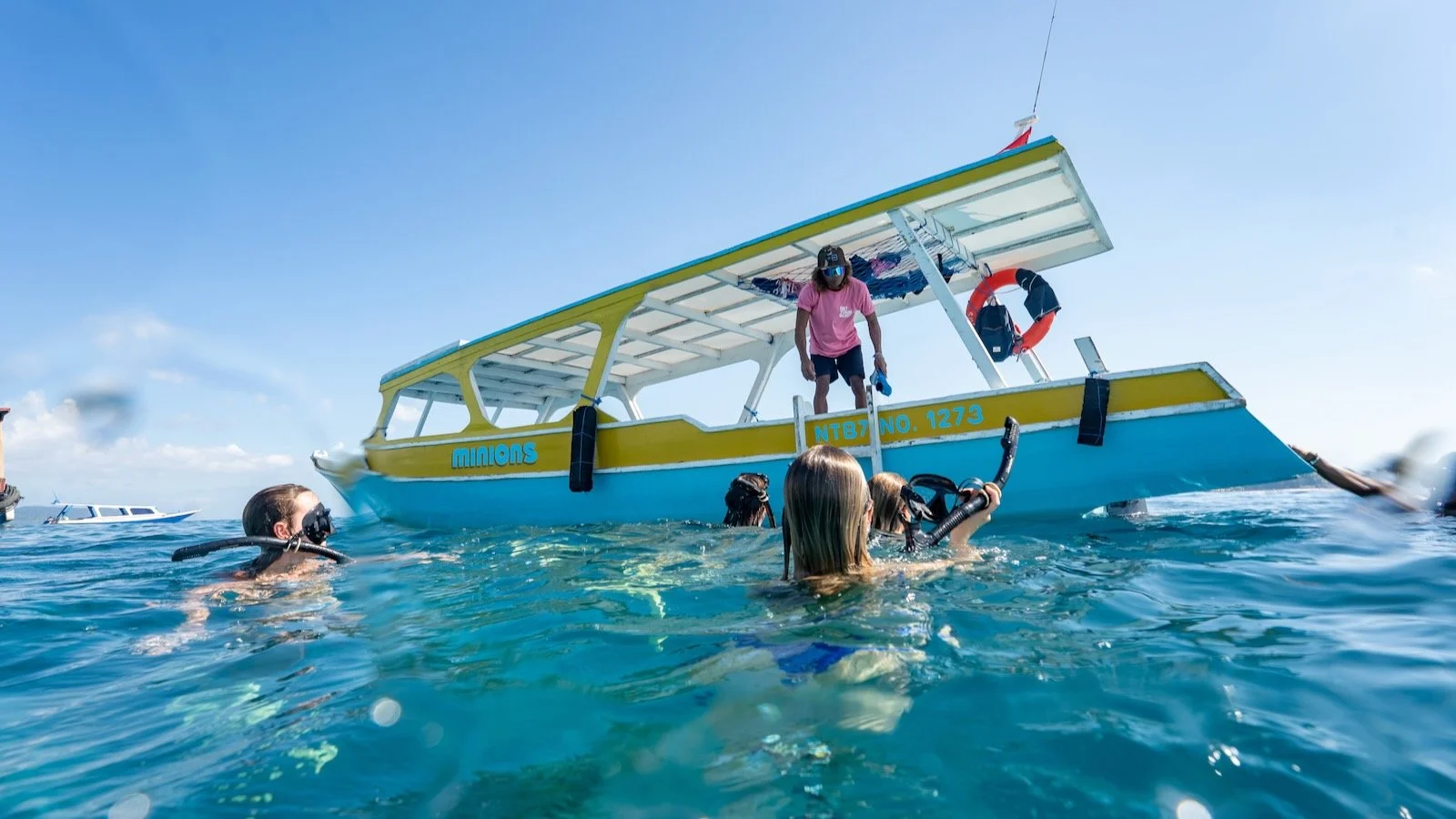
Yes. Their tours are aimed at beginner-level snorkellers and above. The company states that children from eight years old can participate. Life vests and floating rings are available, and a safety briefing is included.
They also accommodate non-swimmers on boat trips, although obviously anyone who is not confident in the water should make that clear before entering the sea and follow the guide's instructions closely.
For families, that makes a guided boat trip considerably easier than simply handing everyone a snorkel and hoping for the best.
Private vs Group Snorkelling
If you are travelling solo or as a couple and want to keep costs down, the small-group trip is probably the obvious choice.
But private snorkelling is worth considering if you are:
travelling as a family
in a group of friends
particularly interested in photography
less confident in the water
trying to avoid busy snorkelling sites at peak times
or simply want more control over how the day unfolds
A private guide can adapt the pace much more easily. If everyone is enjoying one reef, stay longer. If somebody gets tired, move on. If you are particularly interested in turtles, say so before you leave.
That freedom can make the extra cost worthwhile.
GiliPass offer: 10% off Gili Snorkelling trips, including group and private options. Advance booking is recommended.
2. Freedive Gili - Best for Taking Things to the Next Level
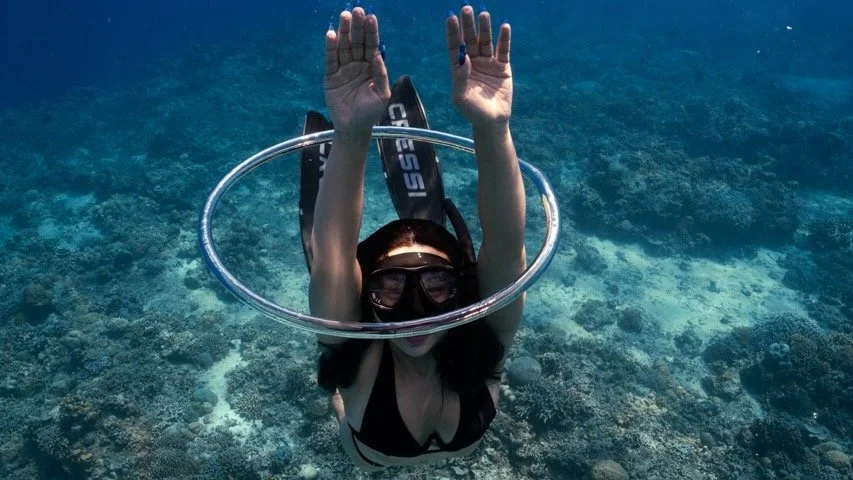
Snorkelling is often where the obsession starts. Freediving is where things become very different.
Freedive Gili describes itself as Indonesia's original freediving centre and has been operating on Gili Trawangan since around 2008–2009. It was founded by Michael Board, an 18-time UK national record holder who went on to build the centre around training, education and the island's unusually good conditions for depth diving.
But you absolutely do not need to be an athlete to start. Complete beginners are exactly who the entry-level course is designed for.
So, What Actually Is Freediving?
At its simplest, freediving is diving underwater on one breath - No tank, No regulator, No bubbles.
But that description undersells it badly. Good freediving is less about forcing yourself to stay underwater and much more about learning to relax. You learn how to breathe before and after a dive. You learn equalisation. You learn how to move through the water efficiently. You learn proper safety and buddy techniques.
And perhaps most importantly, you learn that the urge to breathe does not immediately mean you are anywhere near your actual limit. That changes the experience of being underwater completely.
Instead of quickly ducking down from the surface to look at something and immediately coming back up, you start moving slowly and deliberately through the water.
Suddenly a reef is not something you are looking down at. You are in it.
The Natural Step After Snorkelling
This is why freediving makes so much sense for people who already love snorkelling.
You already enjoy being in the ocean. You are already comfortable with a mask and fins. You already know the feeling of seeing something several metres below you and wanting to get closer.
Freediving simply gives you the technique and confidence to do that properly. And once you learn it, snorkelling changes too. Instead of only swimming over a reef, you can calmly drop down beside it. Instead of watching a turtle from above, you can descend to its level while maintaining a respectful distance. Instead of spending five frantic seconds underwater, you start discovering how much can happen during a relaxed breath-hold.
It is one of those skills that permanently changes how you experience the ocean.
Freedive Gili Level 1
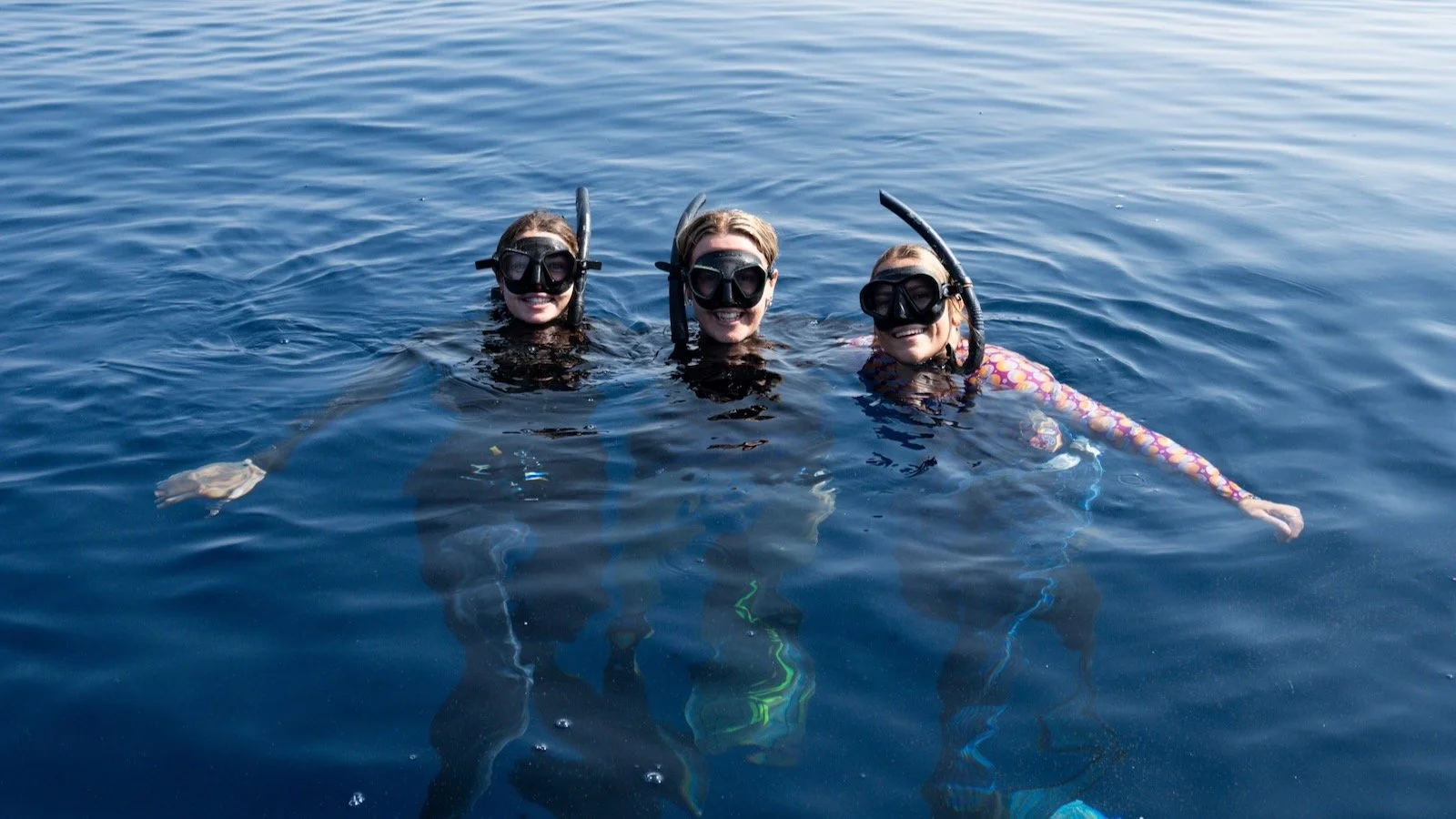
The starting point is Freedive Gili's Level 1 course.
It runs over two days and is designed to teach the foundations of safe freediving. Training begins on land, covering relaxation, breathing, breath-hold technique and safe recovery.
Students then move into Freedive Gili's 25-metre swimming pool to practise dynamic apnea, finning, body position and efficiency before heading into the ocean for depth sessions.
By the end of Level 1, the course is designed to give students the knowledge and skills required to safely freedive to depths of up to 20 metres on a single breath.
Twenty metres sounds absurd if your current freediving technique consists of taking a giant breath and kicking down as fast as possible. That is rather the point.
With technique, relaxation and proper instruction, the difference can be enormous.
What Happens After Level 1?
For some people, Level 1 is enough. You leave with better water confidence, improved breath control and skills that immediately make snorkelling and ocean swimming more enjoyable.
Other people get completely hooked.
Freedive Gili also offers Level 2 and Level 3 courses, line training, coaching and more advanced development. Level 2 moves into advanced equalisation, longer breath-holds and depths of up to around 30 metres, while Level 3 is aimed at more advanced performance and progression.
And because the centre regularly works with experienced freedivers and competitive athletes as well as beginners, there is plenty of room to progress if a two-day holiday experiment unexpectedly becomes your new obsession.
That happens.
Why Learn to Freedive on Gili Trawangan?
The location helps. Freedive Gili's centre is only steps from the beach, and its boat heads directly from in front of the shop to nearby training sites in around ten minutes. That means less time travelling and more time actually training.
The Gilis also have the obvious advantages of warm tropical water, easy ocean access and a genuinely interesting underwater environment. You are not learning in a sterile pool and then wondering whether you will ever use the skill again.
The ocean is right there.
You Can Stay at Freedive Gili Too
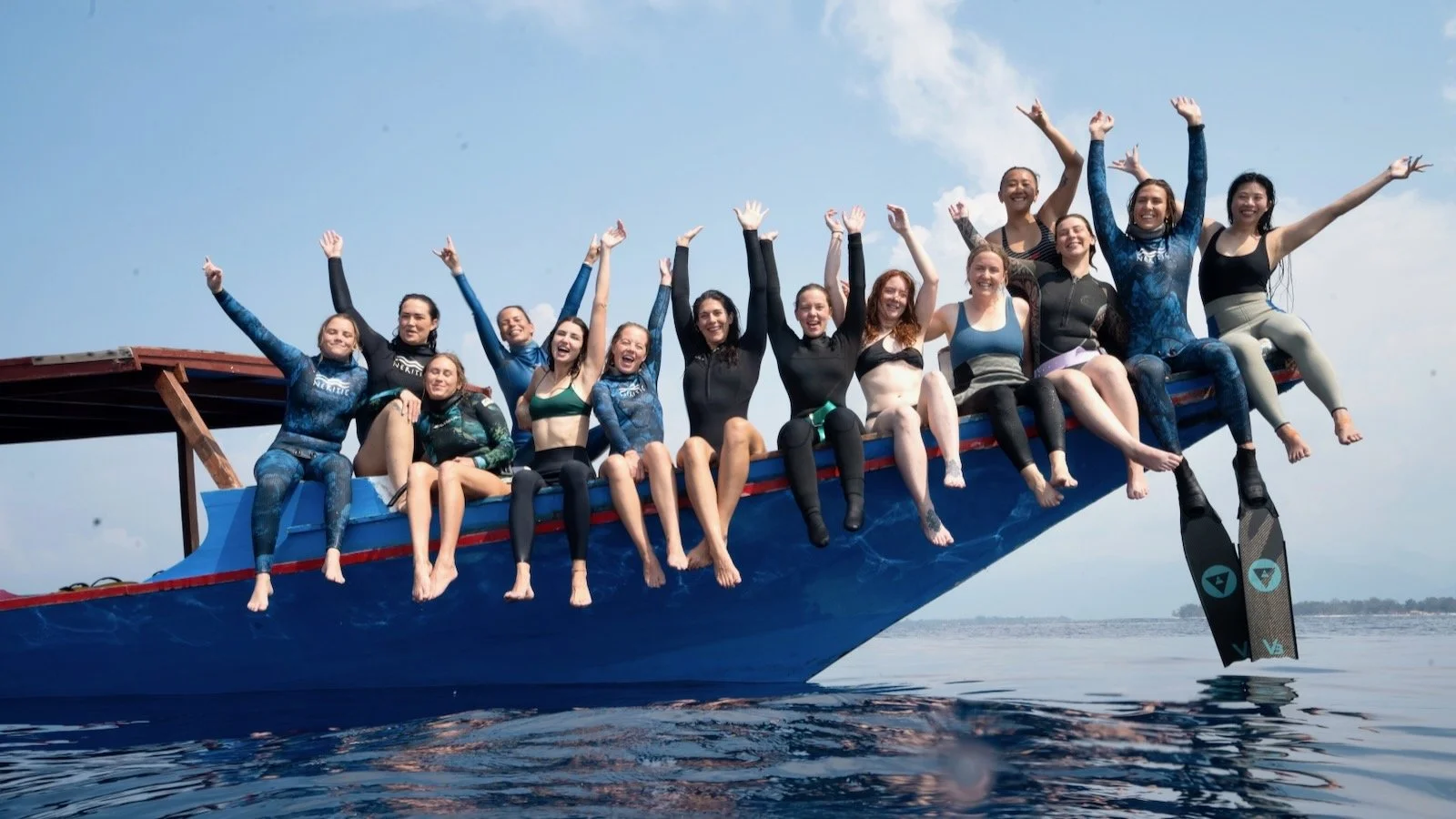
One of Freedive Gili's biggest advantages is that you can turn the course into the entire stay.
The centre has nine bungalows within its tropical garden, creating what is essentially a small freediving and wellness base in the middle of Gili Trawangan.
Rooms include:
air-conditioning
Wi-Fi
mini fridge
hot and fresh drinking water
safety deposit box
Guests also have access to the 25-metre pool and the open-air yoga studio, which offers regular classes.
That setup makes particular sense if you're coming specifically to learn.
Wake up.
Have breakfast.
Walk to class.
Train in the pool.
Head out onto the ocean.
Come back, relax and perhaps do some yoga.
There is no daily commute and no need to organise half the trip around getting to the course on time.
Freedive Gili also states that it offers accommodation discounts and packages for freediving students, so it is worth asking about stay-and-train options when you book.
Even if you are travelling alone, that sort of setup has another benefit. Freediving is social. You're training with buddies, sharing boats and spending time around people who are all there because they love the ocean. It is an easy place to meet people without needing the usual Gili Trawangan bar scene to do it.
GiliPass offer: 5% off the Freediver Level 1 Course. The offer is exclusive to GiliPass holders and advance booking is recommended.
Snorkelling or Freediving: Which Is Right for You?
There is no real competition between the two. They complement each other.
If you want a relaxed half-day on the water, to see turtles and reefs without needing to learn a new skill, go snorkelling.
If you already love being underwater and want to become considerably more capable once you leave the surface, learn to freedive.
And there is no reason you cannot do both. In fact, that is probably the perfect progression.
Start with Gili Snorkelling and spend a day exploring the reefs around Gili Trawangan, Gili Meno and Gili Air.
See the turtles. Swim above the coral. Get comfortable in the water. Then ask yourself the obvious question:
What would this look like from ten metres down? That is where Freedive Gili comes in.
Explore the Gili Islands Underwater with GiliPass
The Gili Islands are surrounded by the thing that makes them special - The ocean.
You can spend your entire trip eating good food and lying on the beach and still have a very good holiday.
But you would be missing half the point.
With Gili Snorkelling, GiliPass holders receive 10% off snorkelling trips around the islands.
And if seeing the underwater world from the surface leaves you wanting more, you can take the next step with 5% off Freedive Gili's Level 1 course.
One gets you into the water.
The other changes what you can do once you're there.
Start at the surface. See where the ocean takes you.